Recurve Bows: Mechanics & Selection
Understanding the anatomy, materials, and configurations of traditional and Olympic recurve bows.
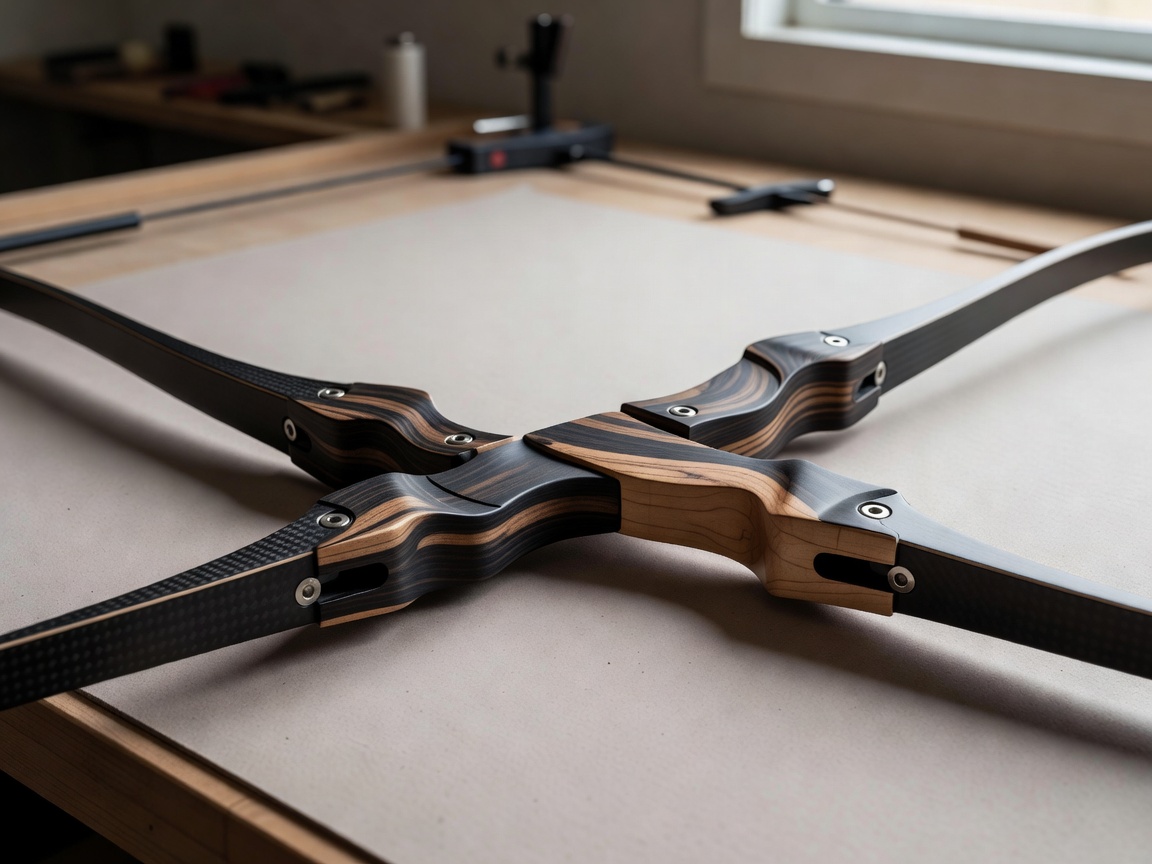
The Anatomy of a Recurve Bow
A recurve bow is instantly recognizable by the way its limbs curve away from the archer when unstrung. This defining characteristic stores more energy and delivers it more efficiently than an equivalent straight-limbed longbow, transferring greater velocity to the arrow.
The bow is conceptually divided into three primary components: the riser (the handle and central chassis), the limbs (the flexible upper and lower arms that store energy), and the bowstring. In modern recurves, particularly those used in target archery, these components are highly modular.
The Riser
The riser is the structural foundation of the bow. It does not bend; instead, it provides a rigid platform for the limbs, sight, arrow rest, and stabilizers. Risers are typically constructed from one of three material categories:
- Wood: Often laminated from multiple hardwoods. Wood provides excellent vibration dampening and a classic aesthetic, commonly used in traditional and barebow setups.
- Machined Aluminum: The standard for competitive target archery. Aluminum risers offer exceptional stiffness, precise tolerances for accessory mounting, and a heavy mass weight that helps stabilize the bow during the shot sequence.
- Carbon Fiber: The most advanced material, offering high stiffness with a lighter mass weight than aluminum. Carbon risers are exceptionally good at absorbing shock and reducing hand vibration.
The Limbs
Limbs are where the mechanical work occurs. A modern recurve limb is a composite laminate, usually built around a core of wood (like maple or bamboo) or synthetic foam, layered with fiberglass or carbon fiber on the belly and back.
Carbon/foam limbs are prized in competitive archery for their temperature stability and snappy recovery, while wood/fiberglass limbs are reliable and cost-effective for beginners and intermediate shooters.
Takedown vs. One-Piece Designs
When selecting a recurve bow, archers must choose between a takedown or a one-piece design.
One-Piece Recurves
One-piece bows are crafted as a single, continuous unit, typically from laminated wood and fiberglass. They are lightweight, traditionally styled, and mechanically simple. However, if the archer outgrows the draw weight—or if a limb is damaged—the entire bow must be replaced.
Takedown Recurves
Takedown bows allow the limbs to be detached from the riser. This modularity provides significant advantages:
- Upgradability: Beginners can purchase light limbs (e.g., 20 lbs) to learn form, and seamlessly upgrade to heavier limbs (e.g., 30 lbs) as they build strength, without buying a new riser.
- Portability: A takedown bow can be disassembled to fit into a compact backpack or hard case, making transportation to the range much easier.
- Standardization (ILF): Many modern takedown bows utilize the International Limb Fitting (ILF) system. This universal standard allows an archer to mix and match risers and limbs from different manufacturers.
Draw Weight and Bow Length
Selecting the correct draw weight is critical. Archery is about repeatability. A draw weight that is too heavy will cause muscle fatigue, leading to poor form, inconsistency, and potential injury. Most instructors recommend starting between 15 and 25 pounds for adults.
Bow length is equally important and is generally dictated by the archer's draw length. A bow that is too short for a long draw length will "stack"—a phenomenon where the draw weight increases exponentially in the final inches of the draw cycle, making the bow uncomfortable to shoot. Conversely, a bow that is too long for a short draw length will not store energy efficiently. As a general rule, an archer with a 28-inch draw length will comfortably shoot a 68-inch target recurve.
Use Cases: Target vs. Traditional
The configuration of a recurve bow is heavily influenced by its intended use.
Olympic Target Recurves are highly tuned machines. They utilize long, heavy aluminum risers equipped with clickers (draw length checks), v-bar stabilization systems, elevated arrow rests, and magnified sights. The focus is entirely on precision and repeatability at known distances (typically 70 meters).
Traditional and Field Recurves strip away the accessories. Known as "barebow" shooting, this style relies on the archer's instinct and spatial awareness. The bows are often shorter to maneuver through brush, and the arrows are shot off the shelf of the riser rather than an elevated rest. This style demands an intimate understanding of arrow trajectory over varied, unknown distances.