Essential Accessories: Releases to Quivers
The critical add-ons that protect the archer, stabilize the bow, and guarantee repeatable execution.
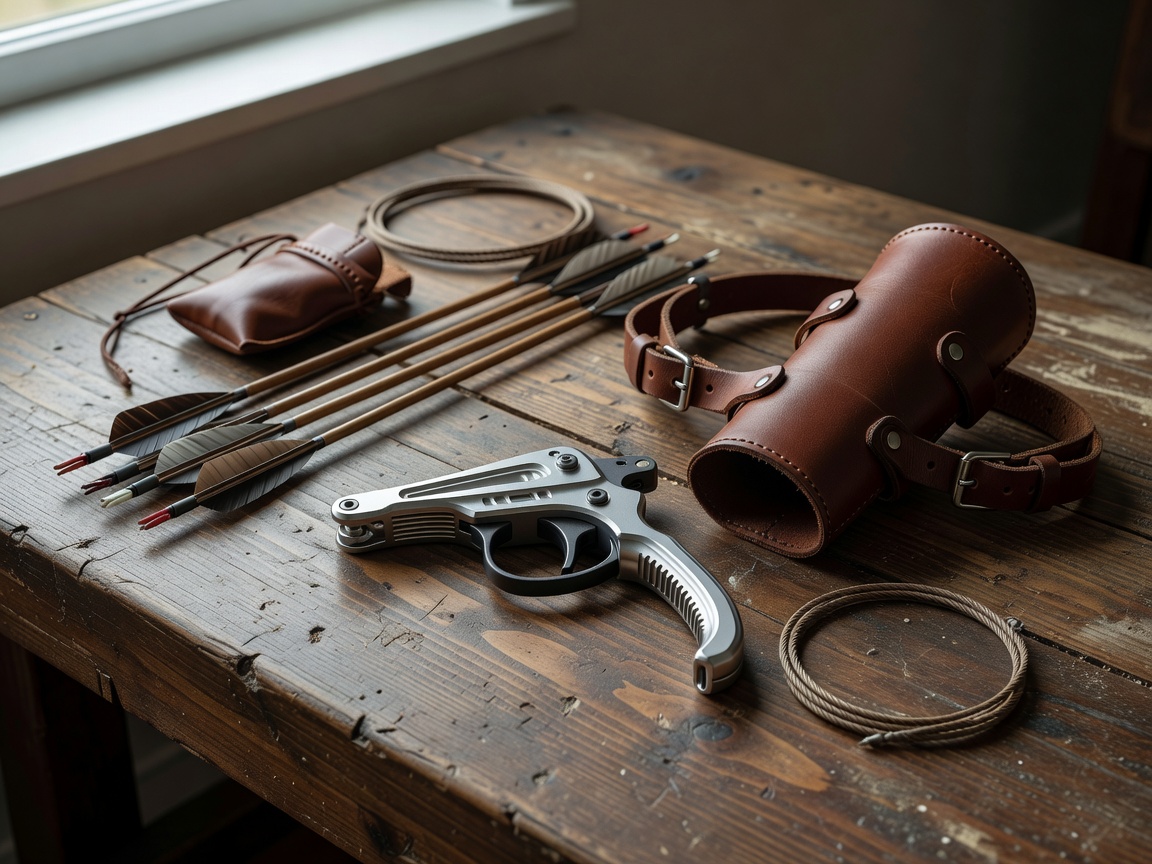
Beyond the Bow
While the bow and arrow represent the core engine of archery, precision at a high level relies heavily on accessories. These tools mitigate human error, protect the body from repetitive stress, and manage the kinetic forces generated during the shot cycle. Selecting the right accessories is just as crucial as tuning the bow itself.
Execution: Tabs, Gloves, and Releases
The interface between the archer and the string is the most sensitive point of the shot cycle. A clean, uninterrupted release is required for accuracy.
Finger Protection (Recurve/Traditional)
Shooting a bow with bare fingers will quickly cause nerve damage and blistering. Traditional and recurve archers use specialized leather to distribute the string's pressure.
- Finger Tabs: A flat piece of cordovan leather or synthetic material that sits between the fingers and the string. Target archers prefer tabs because they provide a smooth, uniform surface for the string to slip off, and often include a shelf for a solid anchor under the jaw.
- Shooting Gloves: A three-finger leather glove preferred by traditional archers and bowhunters for its ruggedness and tactile feedback.
Mechanical Release Aids (Compound)
The acute string angle of a short compound bow at full draw pinches fingers uncomfortably. Therefore, compound shooters use mechanical release aids attached to a D-loop on the string.
- Index/Wrist Strap Releases: The release is strapped to the wrist, and a trigger is pulled with the index finger. Popular for hunting due to ease of use and security.
- Thumb Button Releases: A handheld release activated by depressing a thumb barrel. Promotes pulling through the shot using back tension rather than "punching" a trigger.
- Hinge / Back Tension Releases: Used extensively by target pros, these have no trigger. They release through minute rotation caused by the archer continuously pulling against the bow's wall.
Safety and Comfort: Arm Guards and Slings
String slap—when the bowstring strikes the inside of the forearm upon release—is painful and ruins the shot.
Arm Guards: Made of plastic, leather, or rigid fabric, an arm guard straps over the forearm to protect the skin and keep bulky clothing out of the string's path. It is considered mandatory safety equipment for beginners.
Bow Slings: A proper archery grip does not involve holding the bow tightly; the bow rests passively in the webbing of the hand. Upon release, the bow should theoretically fall away. A bow sling—either wrapping around the wrist or attaching to the fingers—catches the bow, giving the archer the confidence to maintain a relaxed grip without dropping their equipment.
Sighting and Peep Systems
Aiming requires creating a reliable line of sight between the eye, the bow, and the target.
Sights: Sights range from simple multi-pin housings used in hunting (where each pin is calibrated for a specific distance, e.g., 20, 30, 40 yards) to complex micro-adjustable target sights featuring magnifying lenses and a single aiming dot.
Peep Sights: For compound shooters, a peep sight is a small plastic or aluminum aperture inserted directly between the strands of the bowstring. By looking through the peep and aligning it with the circular housing of the front sight, the archer creates a rear-sight alignment system identical to a rifle, ensuring the anchor point is perfectly consistent every time.
Quivers
Arrow management is essential for convenience and safety.
- Bow-Mounted Quivers: Attach directly to the riser of a compound or traditional bow. Essential for hunters who need to carry ammunition quietly through the woods.
- Hip Quivers: Worn on a belt, these angle the arrows backward for easy drawing. Standard equipment for target archers on a static range.
- Field/Back Quivers: Worn over the shoulder, favored by traditional archers for mobility and aesthetic appeal.