Arrows & Shafts: Spine, Weight & Fletching
The science of arrow flight, matching dynamic spine to draw weight, and selecting the right components.
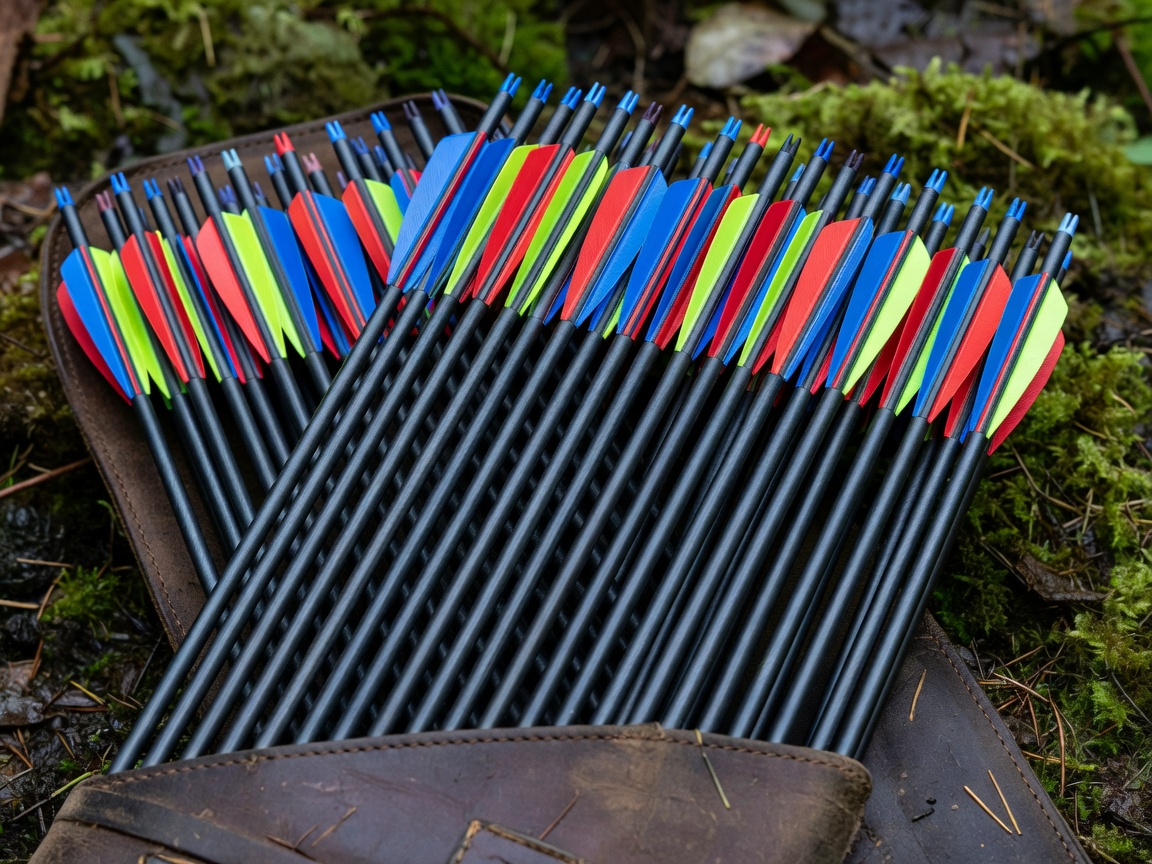
The Foundation of Flight
A bow is merely a launch platform; the arrow is the instrument that delivers the result. Achieving consistent accuracy requires a set of arrows perfectly tuned to the specific energy output of the bow. If the arrow build is flawed, even perfect form will yield erratic grouping.
Selecting an arrow involves three primary considerations: shaft material, spine deflection, and weight distribution.
Arrow Shaft Materials
Historically carved from cedar or pine, modern arrows are highly engineered cylindrical tubes manufactured to micro-tolerances.
- Carbon Fiber: The dominant material in modern archery. Carbon shafts are incredibly durable, returning to absolute straightness after bending. If a carbon arrow fails, it snaps rather than permanently bending. They offer excellent weight-to-stiffness ratios.
- Aluminum: Extruded aluminum shafts offer unparalleled uniformity in weight and straightness, often at a lower cost than high-end carbon. Indoor spot shooters favor large-diameter aluminum arrows to cut scoring lines. However, aluminum will permanently bend upon hard impact.
- Carbon-Aluminum Hybrids: Featuring an aluminum core wrapped in carbon fiber (or vice versa), these premium shafts offer the durability of carbon with the exacting straightness of aluminum. They are heavily utilized in Olympic archery.
- Wood: Used primarily by traditional purists and longbow archers. Wood shafts require meticulous hand-selection and sealing to ensure consistent spine and weight.
Understanding Arrow Spine
Arrow spine refers to the stiffness of the shaft. It is the most critical factor in arrow tuning. When the bowstring is released, it exerts massive compressive force on the rear of the arrow, causing the shaft to buckle and oscillate in flight—a phenomenon known as the "Archer's Paradox."
Static Spine is the physical measurement of how much a shaft bends when a standardized weight is hung from its center. A lower number (e.g., 300) indicates a stiffer shaft, while a higher number (e.g., 500) indicates a more flexible shaft.
Dynamic Spine is how the arrow actually behaves in flight. A bow with a high draw weight requires a stiffer arrow to absorb the energy without snapping or flying erratically. If an arrow is "under-spined" (too flexible), it will wildly veer right (for a right-handed shooter). If it is "over-spined" (too stiff), it will impact left. Arrow length and point weight heavily alter dynamic spine: shortening the shaft or decreasing point weight makes the arrow act stiffer.
Weight and F.O.C.
Arrow weight is measured in grains. Total arrow weight affects velocity and kinetic energy. Heavier arrows fly slower but retain energy better downrange and make the bow quieter by absorbing more vibration. Lighter arrows fly faster, offering a flatter trajectory which reduces errors in yardage estimation.
Front of Center (F.O.C.) describes the percentage of the arrow's total weight located in the front half of the shaft. A higher F.O.C. (typically 10-15%) acts like the heavy head of a dart, pulling the arrow forward and stabilizing its flight, especially in crosswinds or when carrying fixed-blade broadheads.
Fletching Types and Configurations
Fletchings apply aerodynamic drag to the rear of the arrow, initiating spin to stabilize the shaft, much like rifling stabilizes a bullet.
- Feathers: The traditional choice. Feathers fold flat upon contact with the bow shelf, making them mandatory for traditional bows shot without an elevated rest. They offer maximum drag and stabilization but are fragile and perform poorly in the rain.
- Plastic Vanes: The standard for compound and Olympic recurve shooters. Vanes are waterproof, highly durable, and easily glued to carbon or aluminum shafts. They are available in various profiles, from low-profile shield cuts for minimizing wind drift, to high-profile blazers designed to stabilize heavy broadheads.